What Items Can’t Go in a Junk Removal Truck?
Professional junk removal makes it easy to get rid of unwanted furniture, appliances, yard waste, renovation debris, and household clutter. However, not everything can be loaded into a junk removal truck. Certain items are restricted because they pose safety, environmental, or legal concerns.
If you’re planning a cleanup in Toronto, our Toronto junk removal team can help you determine what items can’t go in a junk removal truck, and help you prepare for your appointment and avoid delays. Many restricted materials require specialized handling or must be taken to designated recycling or hazardous waste facilities.
WHY SOME ITEMS CANNOT BE ACCEPTED
Junk removal companies follow municipal regulations and disposal facility requirements. Some materials can be dangerous to transport, while others require specialized recycling or disposal methods to protect people and the environment.
Items that are flammable, toxic, corrosive, explosive, or otherwise hazardous generally cannot be placed in a standard junk removal truck.
WHAT ITEMS CAN’T GO IN A JUNK REMOVAL TRUCK?
While accepted items vary slightly between companies and municipalities, the following materials are commonly prohibited.
Hazardous Chemicals
Many household and commercial chemicals require special disposal because they can contaminate soil and water or create dangerous reactions during transport.
Examples include:
- Paint thinner
- Solvents
- Pesticides
- Herbicides
- Pool chemicals
- Cleaning acids
- Industrial chemicals
These materials should be taken to an approved household hazardous waste collection facility.
Paints, Stains, and Certain Finishes
Liquid paints, stains, varnishes, and wood finishes often cannot be accepted unless they are completely dried according to local disposal guidelines.
Always ask your junk removal company if partially used paint cans are acceptable before your appointment.
Automotive Fluids
Motor oil, gasoline, diesel fuel, brake fluid, transmission fluid, antifreeze, and similar automotive liquids require specialized recycling or disposal.
Because these products are flammable and environmentally hazardous, they should never be placed in a junk removal truck.
Propane Tanks and Fuel Cylinders
Propane cylinders, oxygen tanks, compressed gas containers, and other pressurized tanks present a safety risk during transportation.
Many municipalities have designated recycling or exchange programs for these items.
Batteries
Certain batteries contain chemicals and heavy metals that require special recycling.
This includes:
- Car batteries
- Lithium-ion batteries
- Rechargeable batteries
- Large industrial batteries
Many retail stores and recycling depots accept batteries for proper disposal.
Asbestos
Asbestos-containing materials require licensed handling and disposal due to serious health risks.
Older homes undergoing renovations may contain asbestos in insulation, flooring, ceiling materials, or pipe coverings. If you suspect asbestos is present, consult a qualified asbestos removal professional before scheduling junk removal.
Medical Waste
Medical waste cannot be transported with general household junk.
Examples include:
- Needles and syringes
- Biohazard materials
- Sharps containers
- Medical testing supplies
These items should be disposed of through approved healthcare or pharmacy collection programs.
Explosives and Ammunition
Fireworks, ammunition, explosives, and similar materials are prohibited because they present significant transportation risks.
Contact your local authorities for guidance on proper disposal.
Certain Electronics with Hazardous Components
Although many electronics can be recycled, some items require specialized processing because they contain hazardous materials.
These may include:
- Older televisions
- CRT monitors
- Certain industrial electronics
Professional junk removal companies may recommend certified electronic recycling facilities.
WHAT ITEMS CAN USUALLY BE REMOVED?
Fortunately, most everyday household junk can be safely loaded into a junk removal truck.
Commonly accepted items include:
- Sofas and sectionals
- Chairs
- Tables
- Mattresses
- Bed frames
- Dressers
- Large appliances are often accepted through our appliance removal service.
- Refrigerators (subject to local requirements)
- Washers and dryers
- Office furniture
- Exercise equipment
- Yard waste
- Renovation debris
- Boxes
- Toys
- Clothing
- Household clutter
If you’re unsure whether an item can be removed, it’s always best to ask before your appointment.
WHAT HAPPENS TO YOUR JUNK AFTER PICKUP?
Not everything collected by a junk removal company ends up in a landfill.
Whenever possible, materials are sorted for:
- Recycling
- Donation
- Reuse
- Responsible disposal
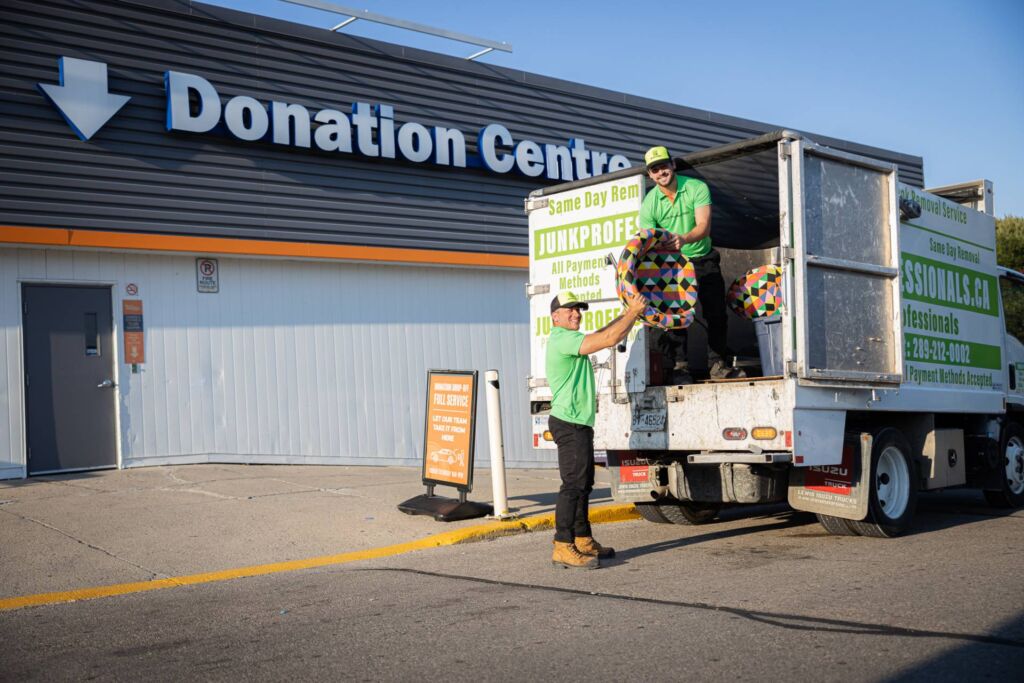
Furniture in good condition, metal, cardboard, appliances, and certain electronics may be diverted from landfills whenever practical.
HOW TO PREPARE FOR YOUR JUNK REMOVAL APPOINTMENT
Preparing ahead of time helps make your appointment quicker and more efficient.
Before your scheduled pickup:
- Separate hazardous materials from regular junk.
- Identify items that require special disposal.
- Group removable items together if possible.
- Let the removal team know if you have particularly heavy or oversized items.
- Ask questions about any items you’re unsure about before the crew arrives.
If you’re planning garage cleanouts, sorting prohibited items ahead of time is recommended. Taking a few minutes to organize everything can help your junk removal appointment go smoothly.
WHAT IF I’M NOT SURE WHETHER AN ITEM IS ACCEPTED?
Many customers have unusual items that don’t clearly fall into standard categories.
If you’re unsure whether something can go in a junk removal truck, contact the company before scheduling your pickup. They can let you know whether the item can be removed, requires special handling, or should be taken to another facility.
Providing photos of questionable items is often the fastest way to receive an accurate answer. This is especially helpful during estate cleanouts, where older household items may require special handling.
SCHEDULE YOUR JUNK REMOVAL WITH CONFIDENCE
Knowing what items can’t go in a junk removal truck helps you prepare for pickup and ensures everything is handled safely and responsibly.
If you have questions about specific items, contact us before scheduling your pickup. Our professional junk removal team can explain what can be removed, what requires special disposal, and how to make your cleanup as simple as possible.
Whether you’re clearing out a home, office, garage, or renovation site in Toronto, planning ahead will help your junk removal project stay on schedule.
FREQUENTLY ASKED QUESTIONS
Can paint go in a junk removal truck?
Many companies cannot accept liquid paint. Fully dried paint may be accepted depending on local disposal regulations, so it’s best to ask before your appointment.
Can propane tanks be removed?
Most junk removal companies cannot transport propane tanks or other pressurized cylinders because of safety regulations.
Can old televisions be picked up?
Many televisions can be removed, but some older models require specialized electronic recycling due to hazardous components.
Can refrigerators be removed?
Yes, refrigerators are often accepted, although disposal requirements may vary depending on local regulations and refrigerant handling requirements.
What should I do if I’m unsure about an item?
Contact your junk removal company before your appointment. They can tell you whether the item is accepted or recommend the appropriate disposal option.